Fixed income. Rising costs. Your support helps close the gap.
Across our community, more older adults are living on fixed incomes that simply don’t stretch far enough. As everyday costs rise, even the most carefully managed budgets are coming up short.
For many, it’s not about budgeting better — it’s about impossible math.
A Monthly Reality
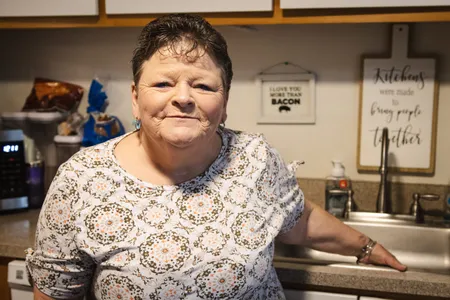
Vicky, a meal recipient
Living with a disability, Vicky navigates daily life in a wheelchair and relies on just $934 a month — most of it going toward rent. Without reliable transportation, even getting to the grocery store isn’t an option.
“Life would be tough without Meals on Wheels People,” she says.
Vicky’s situation is difficult but not unusual.
Most of the people we serve live alone and on less than $1,660 a month, and nearly 30% are over the age of 80. For those receiving SNAP benefits, grocery support often amounts to just $136–$148 per month — about $5.80 a day.
The Breaking Point
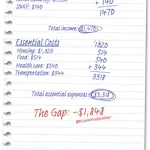
A sample monthly budget for house
holds age 65+ with income below the
federal poverty level and that are asset
limited and income constrained. Source: United for ALICE
When the numbers don’t add up, something has to give. For many older adults, housing and utilities come first. What’s left must stretch across food, medications, transportation, and other everyday essentials.
That often turns into a monthly battle: Groceries or prescriptions? A ride to an appointment or household supplies? A nourishing meal or one more day of going hungry?
And when food becomes uncertain, the effects reach far beyond an empty refrigerator.
Reliable access to nutritious food supports better health, helps people manage chronic conditions, reduces costly medical complications, and makes it easier for older adults to remain independent and connected to their communities.
Without access to nutritious food, health declines faster. Isolation deepens. Independence becomes harder to maintain.
These aren’t choices. They’re tradeoffs no one should have to make.
Because of You
When the math doesn’t work, you help close the gap.
Nutritious meals are delivered each week. Grocery pressure eases. Health becomes easier to maintain. Someone checks in.
That support helps neighbors like Vicky stay nourished, connected, and living safely at home — where they want to be.